If one wishes to give gravitas to a blog post, or a scientific treatise, it is always a good idea to supply a quote from some major thinker to show that you have researched the subject thoroughly. This shows that you have read the books, scribbled in the margins, stroked your chin and when you have come across the quote you have perhaps even said ‘hmmm’ under your breath and nodded sagely. Or perhaps you just found it in a book and thought that it looks clever. Either way, I will begin this posting about birds with an apposite quote.
'Birds in general are stupid' Julian Huxley, 1923
Let me illustrate this point by discussing the nesting habits of three pairs of Coots. Specifically in the Wandle. I am going give three examples and use words and pictures to elucidate behaviour of said bird in some kind of pseudo-scientific way. You shouldn’t really be surprised by this if you are a regular visitor here. I don’t blame you if you go and find something more interesting to do. For those that wish to persist, here goes!
The three examples of nesting are categorised thus – 'the doomed', 'the doomed but interesting', and the 'once doomed but hopeful'. Stick with it kids, it’ll be over in no time.
The doomed.
Not so long back I showed the folly of a pair of coots that plonked down on the banks of the Thames as the tide exposed a suitable area. Here is another example in the Wandle. It is a different pair, of that I have no doubt (there are about five pairs round here, none of them with a hope in hell of success). This area of the Wandle delta is the closest to the chalk stream that wandle once was, and this area of the riverbed is exposed for no more than a few hours at a time, and the nest site and the collection of material is futile. Don’t mock them, they cannot help it.
The doomed but interesting.

Spotted yesterday on the Wandle. If you look carefully you can see that there is a Coot behind the reeds frantically pulling all the nesting material that it’s mate is bringing it into a rudimentary nest. It’s high tide, and the birds are nesting in a quite suitable area. Now, if this nest were being made by any other waterbird you could reasonably expect success. However, these are Coots. Do you know what the problem is? In an hours time the water level will fall, and the nest will become more distant from the surface of the water. And Coots don’t like this one little bit. It doesn’t bother Moorhens, but Coots have to have the base of their nest touching water. So, it was an interesting proposition, but I doubt if the birds will build a nest from the top down that will be 5 metres tall. I've seen this pair (or birds holding this section of the river as territory) starting nests on freshly exposed mud at low tide, so it is possible that they are trying to build two nests a day. Mad.
The once doomed but hopeful.
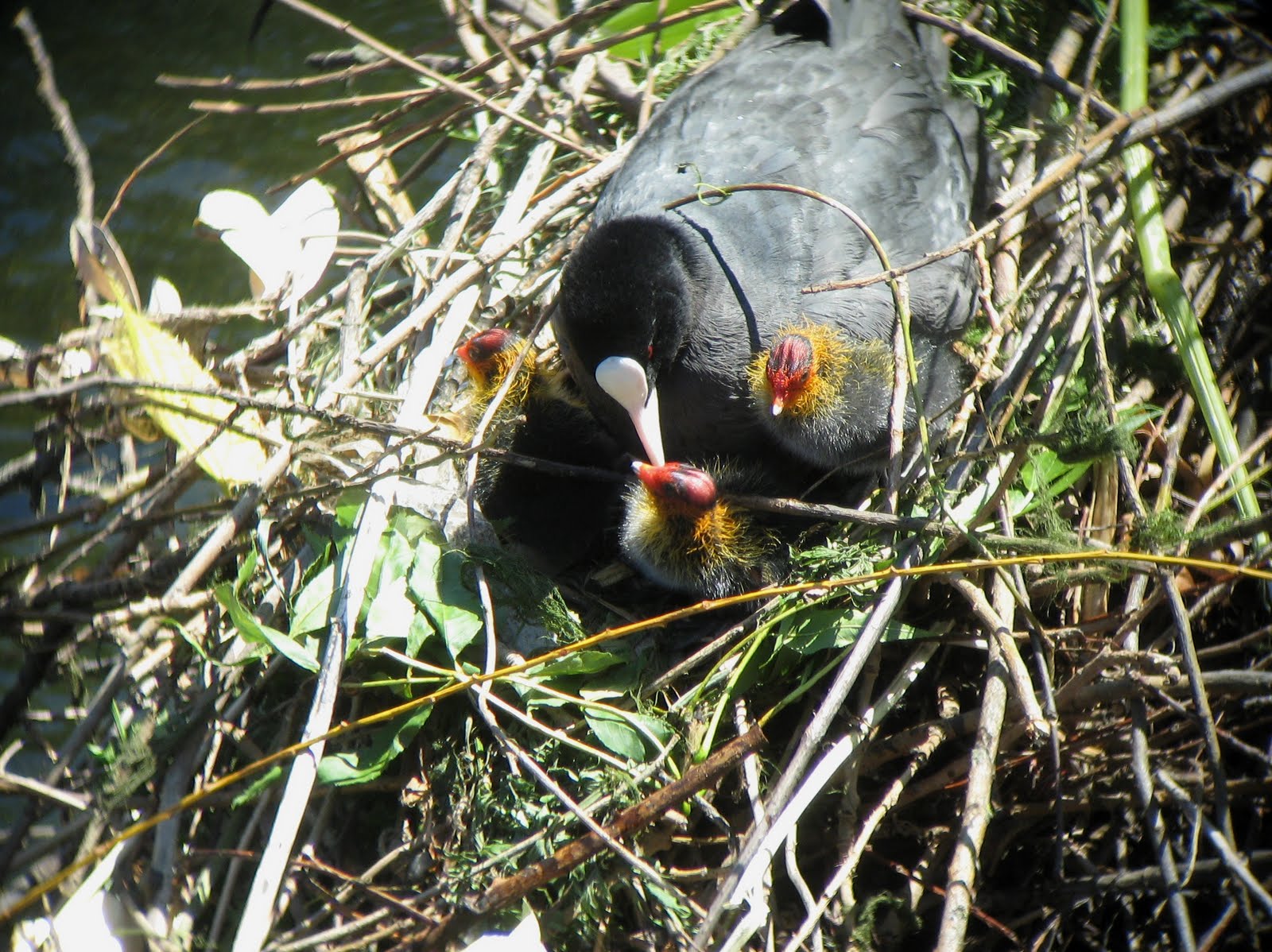
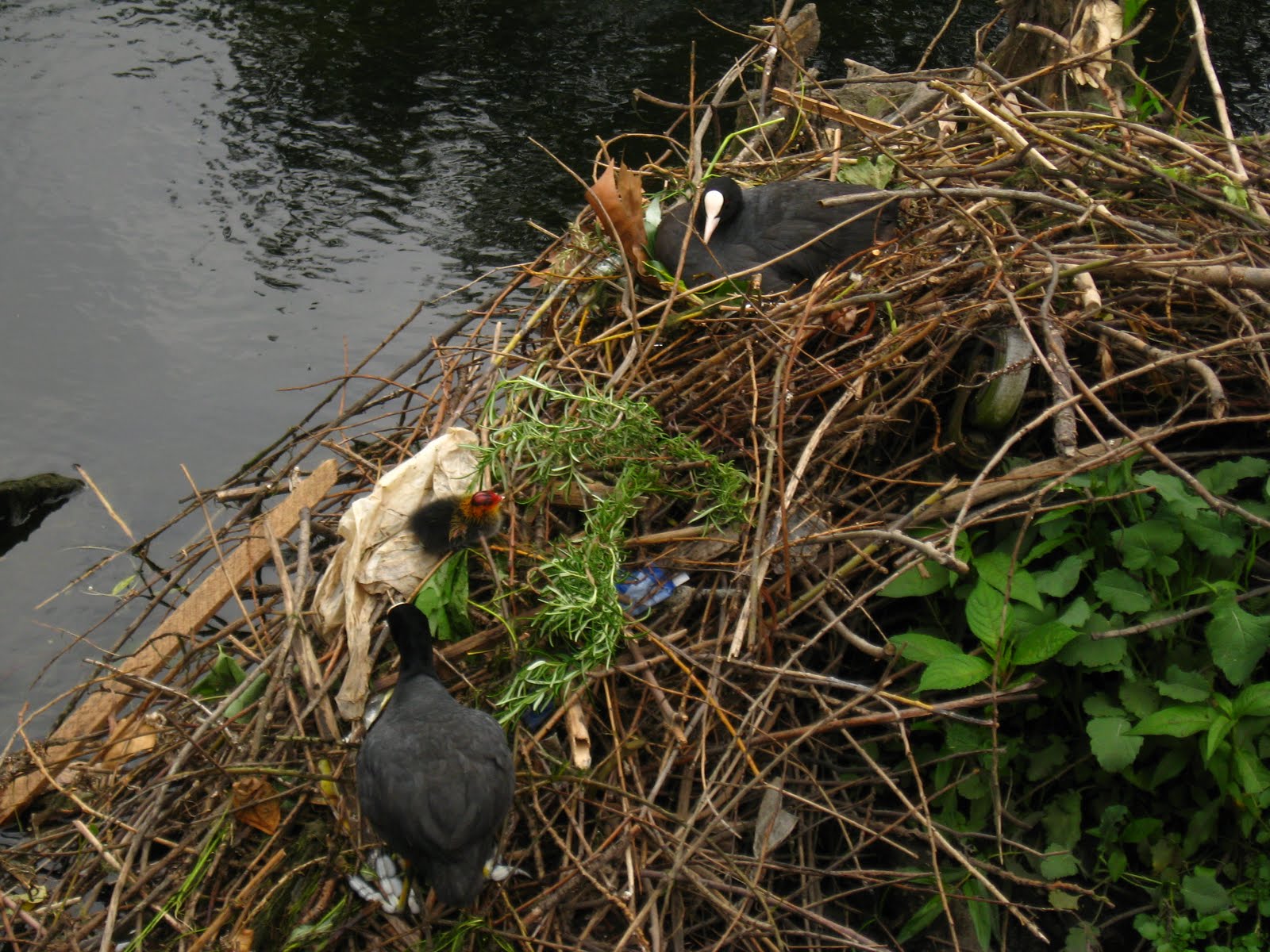
The perennial favourites. The shopping trolley Coots. Now this doesn't look much different to the last picture of this nest. Or does it? To recap, the Coots build a nest, the high tide comes in and the nest is destroyed. Repeat. This is the first time I've seen this particular build at anything like high water, according to my sources the high tide in Chelsea was due at 12:16, build in a delay for Wandsworth and the Wandle and the highest of the tide would have been around about 12:40 and I was there at 13.20. Essentially this picture shows the nest at high tide. And all is calm, which I have never seen before with high water. No drama. The top of the nest is dry. The bird on the nest is still. So this nest that is potentially half way through the incubation time may be high enough to avoid the worst of the tidal flux. Perhaps it isn't doomed after all.
They couldn't actually go and do it could they?
Maybe, just maybe...